AppSumo Alternatives: The Other LTD Marketplaces Compared

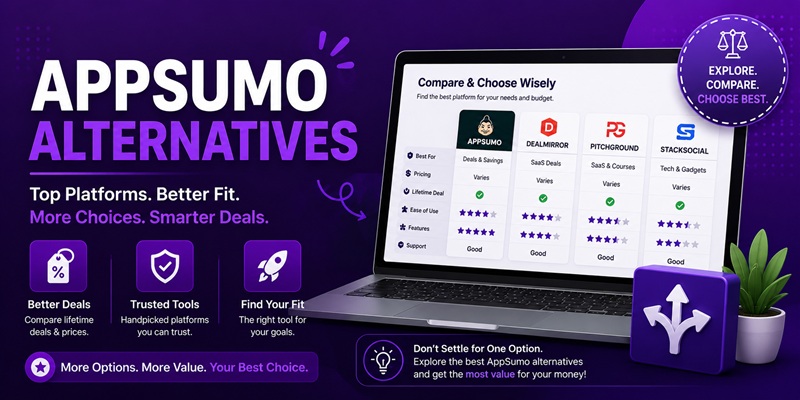
AppSumo isn’t the only place lifetime deals live. The other marketplaces worth knowing, checked live on 2026-07-29, differ mainly on how much vetting they do before a deal goes live and how wide their catalog runs beyond software. PitchGround and DealMirror both lean into curation over volume; StackSocial runs the widest catalog, including non-SaaS products; SaaS Mantra sits in the curated camp alongside DealMirror. None of that ranking is a promise that a deal from any one of them will work out. It only tells you what kind of marketplace you’re buying from, which matters because the marketplace’s own habits are a risk signal in their own right.
Checked on 2026-07-29. Marketplaces open, close, and change their vetting practices, so treat the specifics below as a snapshot, not a permanent ranking, and re-check a marketplace’s current practices before relying on this comparison.
What actually differs between these marketplaces
Every lifetime-deal marketplace runs the same basic mechanic: a vendor lists a one-time price, buyers redeem a code, a refund window applies. What differs is everything around that mechanic:
- How much the marketplace vets a deal before listing it. Some review the product’s roadmap, the founders, and support history before it goes live. Others accept nearly any vendor willing to pay the listing fee.
- How wide the catalog runs. Some stay strictly SaaS. Others sell hardware, courses, VPN subscriptions, and general consumer tech alongside software.
- How the refund and shutdown protections are structured, which can differ from marketplace to marketplace even when the headline “money-back guarantee” language sounds similar.
None of these differences tell you whether a specific tool on a specific marketplace is a good buy. They tell you how much of the screening work the marketplace has already done for you, and how much is still on you.
The marketplaces, compared
| Marketplace | Vetting approach | Catalog scope | What this means for you |
|---|---|---|---|
| AppSumo | Large, high-volume catalog; the platform’s own Partner Terms bind vendors to continued access “for as long as the tool is solvent” | Broad SaaS catalog, primarily software | The largest selection also means the widest range of vendor quality; do your own checks per deal |
| PitchGround | Positions itself around a smaller, more curated set of deals with hands-on founder support and onboarding | Primarily SaaS | Fewer options, but more direct vendor engagement reported around each deal |
| DealMirror | States it reviews a product’s roadmap, founders, and support history before listing | Primarily SaaS | Curation reduces some screening work, but doesn’t replace your own due-diligence pass |
| StackSocial | Broadest catalog of the group | SaaS plus hardware, courses, VPNs, and consumer tech | Useful if you’re shopping beyond software; the software listings sit alongside unrelated product categories |
| SaaS Mantra | Curation-focused, similar positioning to DealMirror | Primarily SaaS | Another curated option worth comparing against DealMirror on the specific deals each carries |
Treat this table as a starting shortlist, not a verdict. Marketplace positioning changes, and the only way to confirm current practice is to read what each platform states about its own vetting on its own site before you buy through it.
Why the marketplace’s own vetting matters as much as the tool’s
A marketplace that reviews a vendor’s roadmap, support history, and founder identity before listing a deal has already done part of the due-diligence work this site’s red flags checklist asks you to do yourself. That doesn’t mean you can skip the checklist, curation standards vary and can loosen over time, but it does mean a curated marketplace is a meaningfully different starting point than one that will list nearly any vendor willing to pay for placement.
The practical takeaway: when you’re new to a marketplace, spend a few minutes reading how it describes its own listing process before you evaluate any individual deal on it. A marketplace that’s vague about how deals get approved is telling you something, even before you’ve looked at a single product.
Refund terms differ by marketplace too
It’s easy to assume every lifetime-deal marketplace runs the same refund window and shutdown protection AppSumo does. They don’t necessarily. Each platform sets its own terms, and the specifics, window length, what’s excluded, whether there’s a separate protection for vendor shutdowns, are published on that marketplace’s own help pages, not carried over from a competitor’s policy. Before buying anywhere other than AppSumo, find that specific platform’s refund policy page and read it the same way this site’s AppSumo refund policy walkthrough breaks down AppSumo’s terms. Don’t assume; confirm.
How to evaluate a marketplace you haven’t used before
A short version of the same three-question lens this site applies to individual tools, applied to the marketplace itself:
- Does it explain how it vets deals? A marketplace that states a real review process (roadmap, founder verification, support history) is doing some of your homework. One that doesn’t mention vetting at all is not necessarily unsafe, but it puts all of the screening burden on you.
- Are its refund terms published clearly, in one place? If you have to dig for the policy or it’s buried in per-deal fine print with no general page, that’s friction worth noting before you commit money.
- Does it have a visible, ongoing track record? A marketplace that’s been running deals for years with a searchable history of past listings gives you something to check a vendor’s history against. A brand-new marketplace has none of that yet, which isn’t disqualifying, but it removes one layer of evidence you’d otherwise have.
Whichever marketplace a deal lives on, the underlying survival and data-portability questions don’t change. Run every tool through the lifetime deal framework regardless of where you bought it.
FAQ
Are lifetime deal marketplaces other than AppSumo trustworthy?
It depends on the specific marketplace and changes over time. Some publish a stated vetting process for deals before they go live; others accept a wider range of vendors. Check each platform’s own description of its review process before buying through it, and don’t assume one marketplace’s practices carry over to another.
Does a curated marketplace mean I can skip the red-flags checklist?
No. Curation reduces some of the screening work but doesn’t replace your own check on a specific vendor. Standards can loosen over time, and a curated listing can still turn out to be a poor bet. Run the red flags checklist regardless of where the deal is listed.
Do all lifetime deal marketplaces offer the same refund window?
No. Refund terms are set per marketplace and sometimes per deal within that marketplace. Read the specific platform’s refund policy directly rather than assuming it matches AppSumo’s published terms.
Is a broader catalog, like one that also sells hardware or courses, a red flag for the SaaS deals on it?
Not by itself. A wide catalog just means the marketplace serves more than one shopper type. What matters more is whether the specific SaaS listing you’re considering shows the same red flags you’d check on any platform.
How often should I re-check this comparison?
Marketplaces change their vetting practices, catalog scope, and refund terms over time, and new marketplaces appear while others close. Treat any comparison, including this one, as a snapshot from its stated check date, and confirm current details on each platform’s own site before buying.
